Airport planning goes beyond being a technical exercise; it’s a strategic opportunity that has direct impacts on how stakeholders, decision-makers, and the general public view an airport’s role in the community. When it comes to planning airport infrastructure initiatives, reaching the Federal Aviation Administration’s (FAA) planning complete milestone is a pivotal moment. To be considered planning complete, the FAA must accept or validate major project scope elements to bring forward for National Environmental Policy Act (NEPA) review and the project meets FAA design standards, is eligible and justified, has an achievable funding plan, and is shown on an approved Airport Layout Plan (ALP).
Though relatively new in name, the ideas behind it have guided how airports prepare for funding, environmental review, and construction for a long time. As airport projects continue to grow in size, complexity, and community impact, understanding planning complete is essential to aligning infrastructure with long-term aviation demand.
Why Early Planning Matters
The most critical part of airport planning is simple: start early. Planning ahead helps airports navigate complex regulatory requirements, ensure safety improvements, and develop long-term, flexible strategies that serve stakeholders and the surrounding community for years to come. This milestone is more than a formality. It’s a gateway to funding, environmental review, and eventual project execution. Once planning is complete, airports can pursue funding for their projects, so without reaching this milestone, even the most urgent infrastructure needs can stall.
Early planning also means early engagement with the FAA, state aeronautics, local stakeholders, and the broader community. Community engagement plays a vital role in future planning. Whether it’s a new hangar construction project or a taxiway rehabilitation, starting conversations early is the catalyst for building consensus, anticipating future challenges, and ensuring funding eligibility. While updating airport master plans typically includes community engagement opportunities, even smaller projects can benefit from coordination among the public, the airport commissions, or advisory boards. Input from the community helps shape realistic, adaptable plans that accurately reflect priorities and protect public safety.
The Impacts on Existing Airport Infrastructure
The planning complete requirement, once limited to new construction and facilities at airports, now commonly extends to reconstruction and rehabilitation projects as well. Even for existing infrastructure, aviation planners must now assess items such as aircraft fleet mix (aircraft sizes), operational volumes (aircraft landings and takeoffs), and tie-down (aircraft parking) needs. For example, at the Alexandria Regional Airport, a near-term runway reconstruction project for which design work was underway, had to pause to meet the planning complete standards which were requested after the project started. During the beginning stages of the FAA’s planning complete initiative, TKDA’s airport planners worked on receiving a design grant for the Alexandria Regional Airport to reconstruct their primary runway.
“We had to put the runway reconstruction on the back burner and brought the planning complete items back to the front,” said Aviation Planner Dillon Petrowitz, highlighting how design work can be delayed if planning milestones aren’t met. This shift reflects a broader trend toward more rigorous planning to ensure projects are compliant and ready for funding.
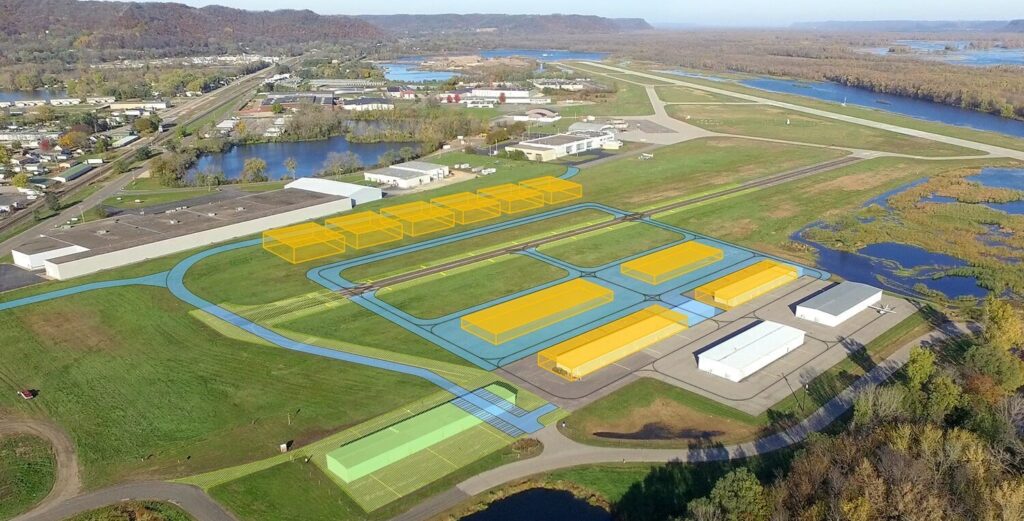
Smaller projects aren’t exempt either. At the Dodge Center Municipal Airport, a partial parallel taxiway project raised questions about apron size and aircraft tie-downs to determine what the project is eligible for in terms of how much traffic they are receiving at the airport. At the Winona Municipal Airport, a taxilane reconstruction triggered questions about the taxiway meeting geometry standards. Additionally, the airport needed an updated building area plan to reflect a crosswind runway decommissioning and to depict future facilities such as a Snow Removal Equipment (SRE) building.
The concept of planning complete is not exclusive to certain airports – both general aviation and commercial service airports must reach this milestone to receive funding for their infrastructure projects. While it’s common for larger commercial service airports to work towards the planning complete milestone internally, we can also assist. At the Minneapolis-St. Paul International Airport, we provide data to support their projects such as final design concepts to near-term airport pavement and building projects. This data is then fed into updating the Airport Layout Plan which is required by FAA to show any changes in airport development and ensure the proposed development meets FAA design standards.
Setting an Example in Airport Planning
Ultimately, the most successful airport plans are realistic, flexible, and have the community at the forefront. These plans reflect what’s achievable, adapt to ever-changing priorities, and serve as a guide to preserve and protect future options. By embracing planning complete and starting these efforts early, airports can set an example for others to build safe and sustainable infrastructure that’s ready for the future.