
Adela Delucchi Leads Cal Poly Timber-Strong Design Build Team to a Win
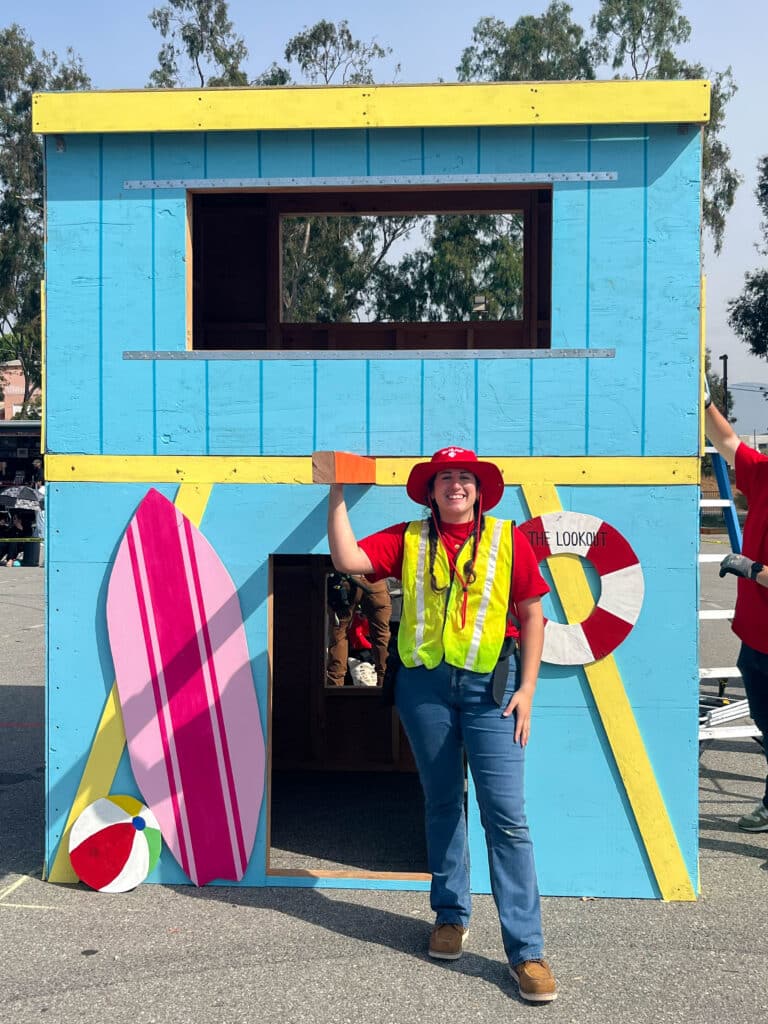
At TKDA, we value interns for the fresh perspectives, curiosity, and energy they bring to our teams, and for the role they play in shaping the future of our industry. One of those interns is Adela Delucchi, a structural engineering intern and fourth-year civil engineering student at Cal Poly San Luis Obispo. Outside of TKDA, Adela served as project manager for Cal Poly’s Timber Strong Design Build team, where she helped guide the team to an exciting first-place finish at the Timber Strong competition!
What initially drew you to pursue an internship at TKDA?
I’m a fourth-year civil engineering student at Cal Poly San Luis Obispo, originally from Seattle, and throughout my college experience I’ve developed a strong interest in structural engineering.
Over the first two summers of my college career I interned with the Port of Seattle as a Design Intern, where I gained insight into how a public organization operates and serves its community. This past summer, I wanted to experience the other side of the industry (the private sector) and that’s what initially drew me to TKDA. I was especially interested in TKDA’s community-oriented culture. It really feels like everyone is working toward a shared goal, which is something I value, especially as part of a 100% employee-owned company.
How have hands-on project work and mentorship shaped your internship experience?
Early on in my internship, I had the opportunity to get hands-on experience working directly with a client. The project involved designing for the installation of solar panels at multiple sites across a city in the southwest, including at a minor league baseball stadium. It was a great first project and an overall really positive experience. Across all the projects I’ve been able to work on, I’ve had an incredible amount of support and guidance from my coworkers and my manager.
I especially want to thank my manager, Dan Munn, and my coworker, Peter Swanson, for all the advice and feedback they’ve given me during my time here. This year, Peter has also been a practitioner advisor for my timber design-build club, and he was incredibly helpful. We were able to go to him with questions about our design, and he did a great job breaking down some of the more complex challenges we were facing with our structure.
For those who may not know, can you explain what the Timber-Strong Design Build competition is all about?
The Timber-Strong Design Build competition is a student-led competition that focuses on the design and construction of a full-scale timber structure. This competition requires real-world practice and makes teams apply relevant skills such as structural analysis, construction documentation, project scheduling, budgeting, and full-scale assembly.
This year, I was the project manager for the Cal Poly team, which competed at the ASCE Pacific Southwest Regional Symposium in March. Over the course of three days, we competed by constructing our building and presenting it to the judging panel.
What has your experience been like as the project manager for Cal Poly’s Timber-Strong Design Build team?
It was an incredibly rewarding experience, to say the least! I have been involved with this team as a general member for most of my time at Cal Poly, and during that time, I noticed opportunities for improvement both at the leadership level and within the club as a whole.
When I stepped into a leadership role, my mission was to build on the progress of previous years and accelerate the club’s growth. I believe I accomplished that. One of my key initiatives was introducing the role of Junior Captains, with an emphasis on leaving the club in capable hands after I graduate. These roles proved crucial for knowledge transfer and made a noticeable difference in how the club operates compared to previous years. Underclassmen now can take real ownership of portions of the project while learning directly from team leads, setting them up for success in future years.
I also introduced sponsorships to support the financial growth of our team. With partners like TKDA, we were able to cover the costs of our structure and competition registration and invest in tools and resources that will benefit the team for years to come. This helps ensure that future members are set up for success. Ultimately, that’s what I value most about this role: helping future engineers gain hands-on experience that will serve them throughout their careers.
Your team recently painted the structure and practiced assembly. How did those hands-on moments prepare you for competition day?
I remember joking with the team’s Design Lead and Construction Lead earlier in the year when I was setting the schedule. I said that once we reached paint day, then I’d know we were almost at the finish line and I could finally breathe. But more seriously, it truly felt like the cherry on top of a year’s worth of planning, design, and preparation.
Countless hours of problem-solving, quick thinking, difficult decision-making, and planning went into bringing this structure to life. I wholeheartedly believe that our structured and intentional workdays played a major role in our success and ultimately in winning the competition